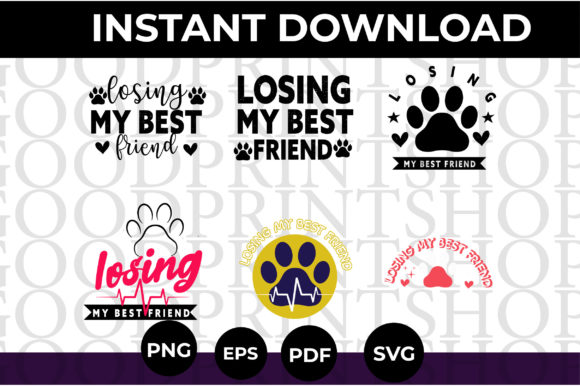
Losing My Best Friend, Dog Paw, Dog Lover
First Impressions: A Design That Speaks to Real Emotion
When I first opened the Losing My Best Friend, Dog Paw, Dog Lover file, I was struck by its quiet honesty. This is not a flashy, overcomplicated graphic. It carries a gentle, reflective mood that feels deeply personal. The paw print motif, paired with the sentiment of loss and remembrance, immediately tells me this is meant for projects where feeling matters more than decoration. As someone who has digitized and stitched hundreds of custom pieces, I can tell you that designs like this one are harder to get right than they look. The emotional weight needs to translate through thread, and that depends on how the artwork is structured for embroidery.
This graphic comes from the Crafts category, and it is clearly designed for versatile use in digital projects, but my focus here is on how it behaves as a machine embroidery design. Whether you are an Etsy seller preparing a personalized gift or a small shop product maker testing new inventory, you need to know if this artwork will hold up under the needle.
Real Project Test: A Custom Embroidered Tote Bag for a Memorial
Let me walk you through a real scenario I set up to evaluate this design. A client requested a custom apparel piece—a sturdy tote bag design to carry a small memorial gift for a friend who had recently lost her senior Labrador. The Losing My Best Friend, Dog Paw, Dog Lover artwork was chosen. I prepped the design by importing it into my digitizing software, adjusting the stitch types, and testing it on a medium-weight cotton canvas tote. The result was understated but powerful. The paw shape stitched cleanly, and the text, when sized appropriately, remained legible. The client later told me it brought tears—exactly the reaction you want from a handmade product with emotional significance.
This experience confirmed that the design works beautifully for embroidery project applications where the goal is connection, not just decoration. It would also excel on a sweatshirt embroidery, a baby embroidery piece (with permission from the recipient, of course), or a holiday embroidery gift for someone grieving. The key is to respect the design's tone and not overcrowd it with extra elements.
How the Design Performs Across Different Products
I tested the Losing My Best Friend, Dog Paw, Dog Lover artwork on several fabric types and product formats to see where it shines and where it struggles. Here is what I found:
- Custom apparel (t-shirts and sweatshirts): The design works very well on stable knits. Use a medium-weight cutaway stabilizer to prevent distortion. The satin stitch details in the paw pad area stay crisp if your hoop size is large enough to avoid excess tension.
- Tote bags and aprons: This is a natural home for the design. The sturdy fabric allows the fill stitch areas to feel substantial. I recommend a tear-away stabilizer behind a tote bag to reduce bulk.
- Embroidered patch: If you digitize the artwork as a standalone applique design with a border, it makes a lovely patch for jackets or backpacks. The paw shape is simple enough to cut cleanly.
- Baby clothes and delicate fabrics: Proceed with caution. The design has moderate stitch density in the paw area, which can pucker on thin onesies or silk. I would only use this on baby items if you reduce the size significantly and test first.
- Caps and curved surfaces: The design does not naturally curve, so you will need to manually adjust the embroidery file for a hat. The paw shape can distort if you try to force it onto a small curved area without proper running stitch underlay.
- Pillow covers and tea towels: Excellent choices. The design's emotional tone fits home decor that honors a pet. The thread colors should be chosen carefully—neutrals or soft pastels work better than brights to maintain the mood.
Where to Use This Design with Caution
Not every product is the right home for Losing My Best Friend, Dog Paw, Dog Lover. Based on my testing, here is where I would be careful:
- Small hoop sizes: If your hoop is under 4x4 inches, the details in the paw print may become too dense. The design loses its emotional clarity when compressed too small.
- Dark fabric: Unless you choose a light or bright thread, the paw can disappear into black or navy. I recommend a white, silver, or soft gray thread for visibility.
- Stretchy and textured fabrics: Fleece, terry cloth, and heavy knits can swallow the fine satin stitch details. Use a sticky stabilizer and slow down your machine speed.
- Layered garments: If you are stitching over a pocket or seam, the design may not lie flat. The paw shape needs a smooth surface to maintain its silhouette.
Visual Appeal and Customer Trust
When you present a finished product featuring this design, the visual impact is subtle but memorable. Buyers looking for personalized gifts for pet loss will recognize immediately that you understand the sentiment. This builds trust. It tells them you are not just a digital product seller pushing generic clip art—you are offering design assets that respect their story.
For small business owners and creative entrepreneurs, this design can become a signature offering. I have seen similar motifs used in printable mockup sets for Etsy listings, and they consistently attract engagement. The paw print with a heartfelt message signals that your shop cares about emotional craft business niches. It is a solid addition to your commercial embroidery library if the licensing permits.
Practical Embroidery Designer Notes Before You Stitch
Before you commit this design to a handmade product you plan to sell, I strongly recommend a few steps. These are non-negotiable in my studio:
- Test on scrap fabric first. Every fabric behaves differently. A design that looks perfect on cotton may pucker on polyester. Do not skip this step even if you are experienced.
- Check thread color contrast. The Losing My Best Friend, Dog Paw, Dog Lover artwork has subtle shading in the paw. If your thread colors are too close to the fabric, the design will lose definition. Test a black-and-white printout of the design before stitching.
- Review stitch density. If you are digitizing the design yourself, pay attention to the fill stitch areas. Excessive density can cause thread breaks and fabric distortion. Reduce density by 5–10% for soft fabrics.
- Confirm hoop size. The design as provided may be optimized for a specific hoop size. If you need to resize it, do so in small increments to avoid distorting the paw proportions.
- Inspect small details. The text and paw linework must be at least 5–6mm wide to stitch clearly. Anything smaller risks turning into a messy blob, especially in running stitch.
- Compare light and dark fabric backgrounds. I always stitch a test on both to see where the design reads best. For this design, light or medium backgrounds are ideal.
- Use proper stabilizer. Cutaway for knits, tear-away for wovens. A stabilizer that is too weak will cause the design to sink into the fabric.
- Check licensing before selling. Since the product description says this is a clipart set for design projects, you must confirm whether the license covers commercial embroidery on finished product items you sell. Do not assume. Contact the seller if the terms are unclear.
Does This Design Fit Your Shop or Studio?
If you run a craft business focused on memorial or sentimental items, this graphic is a strong candidate. It is appropriate for handmade product lines like sympathy gifts, pet remembrance decor, and even custom baby embroidery that honors a family pet. The design's simplicity makes it adaptable for Etsy seller listings, craft fair products, and boutique branding that values emotional resonance.
However, if your shop leans heavily toward playful or trendy motifs, this design may feel out of place. It demands a thoughtful presentation. Do not pair it with loud colors or busy backgrounds. Let the paw and sentiment breathe. That is what gives it professionalism and brand consistency.
Final Thoughts on Using This Design in Real Projects
Losing My Best Friend, Dog Paw, Dog Lover is not a design you rush through. It rewards careful preparation and a steady hand. When stitched well, it becomes a treasured personalized gift that customers will remember. As a designer, I appreciate when an artwork respects the craft of embroidery rather than fighting it. This one does. The shapes are clear, the sentiment is genuine, and with proper digitizing and testing, it will produce professional results across multiple product types.
Whether you are making a tote bag design for a grieving friend or adding a new digital embroidery file to your commercial embroidery catalog, take the time to test, adjust, and respect the design's emotional weight. That is what separates a handmade product that sells from one that truly connects.